- Capsule
- Posts
- Capsule #128 ft. Yingge
Capsule #128 ft. Yingge
2026 might be about being less hard-line.

Holly Beddingfield
January 16, 2026

Hello hello,
Happy Friday to you 🫶
In this week’s newsletter, I have an overarching theory about how 2026 might unfold. I’d love to hear from you if you’ve been feeling any of these shifts yourself!
And some housekeeping: all being well (🤞), this will be the last newsletter sent from Beehiiv. As of next week, you’ll receive the newsletter from Substack. I’m excited to move because it opens up so many more ways for us to engage with each other - we can have discussions in the comment section, you can connect with other Capsule readers for thoughts and recommendations, and for those of you who like Substack and their app, you can access Capsule in there too. Equally, if you just want the regular Friday inbox experience, nothing needs to change.
The good news: You shouldn’t need to do anything, I’ll be migrating your subscription over automatically.
The ask:
If you can’t see Capsule in your inbox next Friday, you may need to check your spam folder for it and add us to your contacts / mark as safe / move to your primary inbox.
It would be great if you could reply to the newsletter next week to say hello, to help signal to your email provider that it’s safe and you want it.
Okay that’s it! Have a great weekend, and excited for what’s to come,
Holly x

After a flurry of 2026 in/out lists, and grabby headlines about the death of Labubus or clubbing or drinking, I thought we could slow down a bit and have a more considered look at what themes and trends might drive the next 12 months. The truth is, the turn of a new year offers lots of psychological renewal, and brands certainly kick-start a new cultural calendar, but the seeds of what is to come have already been sewn over the past year (and even before that).
Weighing up culture in 2025 and looking for signs to show what might be coming revealed a core, overarching theme, which I think is being less hard-line on things. That’s not to say that certain habits or affinities won’t be upheld, but more that emerging trends across culture signal, to me at least, an appetite for nuance, for flexibility, for fluctuation.
Here are a few that stick out:
The IRL/online distinction
I can’t think of anyone who isn’t trying to spend less time on their phone right now. People are using Brick to block out distractions (my friend has two, one for home and one for the office). We’re making lists of things to do instead of scrolling in the evening (reading, knitting, puzzling). A few people are still sharing personal updates on Instagram (but grid posts feel increasingly rare), TikTok is deleted to preserve attention span, and literally nobody is on X (except me, I think the fashion commentary accounts are good I’m sorry).
In the wake of all this is a bunch of content and marketing geared towards getting offline and going outside. Carousels of hiking weekends with bare faces, flasks and Salomons. Cabin escapes with companies like Unplugged, promising digital detox holidays where you can truly rest. And mantras everywhere, about touching grass, about how walking solves most problems, about eating berries and frolicking in the sea.
But something else is emerging too, some kind of acceptance that not all versions of being online are bad or the same. Pinterest reigns as the app people associate least with toxicity. A friend who came off Instagram years ago recently debated joining back, feeling like the tidbits missed from Close Friends and ad-hoc Story replies were eroding her periphery relationships (you could say “text them!”, but we know there is a broader band of friendships for whom you probably wouldn’t just say “how are you?” out of the blue). And articles, like this one from Meena Alexander, share how social media cleanses can be lonely:
“The daily hits of connection I’d usually get – a shared laugh over a silly video, a restaurant recommendation, a kind comment – were replaced by a feeling that most people had simply forgotten I existed. Out of sight, out of mind.”
Social media usage is down for sure, and many people are setting limits and physically trying to block short-form content, but the knee-jerk, cold turkey approach is also paving the way for more nuance. In 2026, I think cutting back will be followed by flexibility - accepting the trade-offs that come with being online but still make it worth it, while striving to be present in the moments that are better spent with our phones away.
Speaking of nuance, the alcohol/sobriety line might be softening too.
The past few years have been big on the Gen Z-fuelled alcohol decline, the death of clubbing, and the rise of sober activities (run clubs, book clubs, board game cafés, etc). I don’t think this trend towards more intentional socialising is about to stop, and most people are happier with less hangxiety. But like digital detoxes, 2026 might give way to more realisation that abstinence can solve some problems but introduce others. Quitting drinking often comes hand in hand with quitting certain social events, which may mean waking up hangover free, but with a burgeoning sense of loneliness.
In this GQ piece, Dean Stattmann shares that sobriety began to have a negative impact on his mental health:
“Despite all that, it wasn’t long before I realized that my new sober life hadn’t made me any happier. In fact, it seemed to be taking a subtle, indirect toll on my mental health. It wasn’t that I missed the alcohol, but I was beginning to realize all the opportunities it provided me.”
Stattmann has since reintroduced alcohol for certain situations where the benefits are worth it. (It is obviously worth flagging that this distinction simply isn’t possible for some people who struggle with alcoholism, and that’s a different thing.) But for many, there is a balance to be found. Committing to sobriety means there are a set of rules to keep or else, and that ‘or else’ is often self-punishment or shame. In 2026, I think there will be more cases of “damp drinking” - having one or two drinks, if at all - and being generally mindful of consumption without pursuing total abstinence.
Going all in on human craft, but also being less hard-line on AI
AI has absolutely made evidence of humanity and craft feel more prized than ever before. Prada’s AW25 ‘Antiqued’ pumps show ‘unfinished’ leather stitching to emphasise the artisan craft behind the product. Rosalía is keen to categorise her album LUX as a human work of art, definitively not AI. And naive design is trending, a style that uses messy doodles, wobbly letters, and off-kilter illustrations to defy the perfection of AI-generated art.
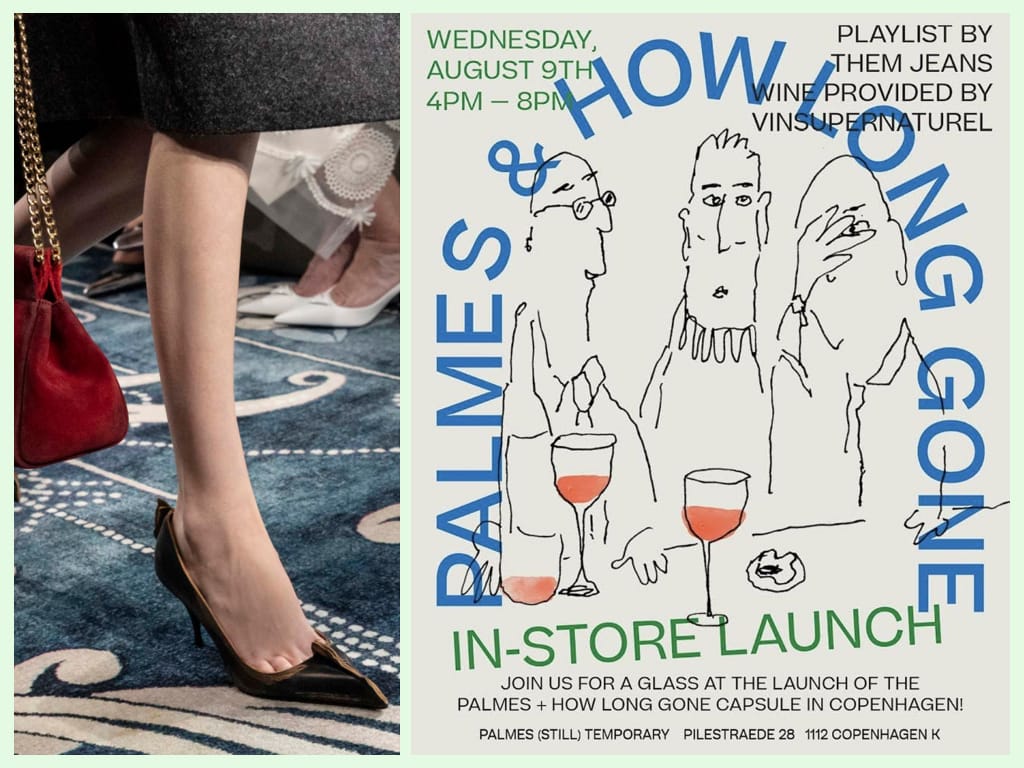
Prada’s ‘Antiqued’ pumps; an example of naive design
But in 2026, AI is embedded in pretty much all touch points of work and culture. As a result, I think we’ll increasingly differentiate between the instances in which we like or dislike AI, softening our stance on the areas for which it feels okay (even good?). I’m noticing people who were originally anti all AI use finding ChatGPT or Google Gemini pretty enlightening when it comes to things like holiday planning or creating recipes. Admittedly this is not the same thing as art, and I think that’s an area where humanity will always matter, but other usages of AI now don’t feel so different to asking for a recommendation on Instagram or straight Googling. These behaviours are already happening, and I think will lead to a slightly softened tone in AI discussions.
And finally, being less hard-line on what you do.
Influencers and brands are moving against having one niche: Hollie Mercedes has slowly branched out from fashion content to sport, the outdoors, and building a brand, Charli xcx is acting, Gracie Abrams just landed her first role, Dua Lipa is doing skincare, Zara is doing hair care. Some of these moves are about diversifying revenue but they also have an essence of seizing the day and doing the things you’ve always wanted to try. Whether for the sake of dreaming big like Marty Supreme, or the need to recession-proof your skill set, I think this ethos of branching out and going for more will trickle down into our culture. Does it matter more to neatly summarise what you do, or to live fully?
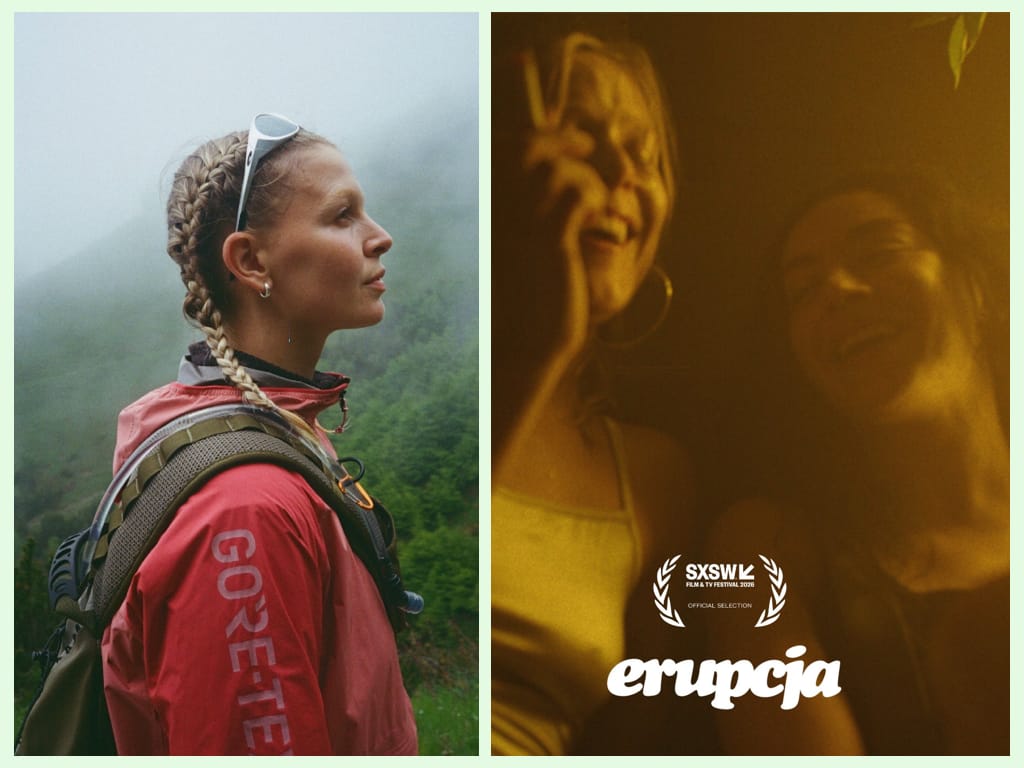
Hollie Mercedes hiking content, Charli xcx in Erupcjia
Let this be the year of fluctuation. If you have any thoughts on this, I’d love to hear from you. Just hit reply 📧
And finally…
News from the Capsule universe you may have missed this week:
The best fashion from the Golden Globes
Digital cameras didn’t need any more good press but this will do it!
No one is better in an interview than Ayo
Another great photo of Jennifer Lawrence in a leopard jacket
Now this is a photo shoot!
One thing the future will certainly hold: more Ariana Grande and Jonathan Bailey
A$AP Rocky gushing about Rihanna on Popcast if that’s your thing
Counting down the days til this is released
Charli is having fun with marketing again
Huge news: American Apparel stores are back
And here’s what we’ll be talking about for the next few months 🪩

This week, Yingge popped into Capsule to share what’s 🔥hot🔥 and what’s not 🙅♀️ …
Yingge (David Yang) is a British-Chinese singer, songwriter, producer and and model whose work blends alt-pop with early-2000s nostalgia with modern production, as can be heard on his latest release ‘Bleach’. Splitting his time between Shanghai and London, he writes music shaped by movement, memory and identity. Outside of music, he has fronted global campaigns for brands such as Balenciaga, Valentino, Bottega Veneta and Tiffany & Co., and has appeared in TV and film including a short-film by director Wong Kar-Wai.

🔥🔥🔥Hot🔥🔥🔥
the opening segment on the 'Dish' podcast when Nick and Angela discuss a singular vegetable, 'Make Some Noise' on Dropout.tv, my cats sleeping on the bed now that it's cold, Josh O'Connor, coffee (black) so hot that it burns your mouth, Jujube + Goji + Longan tea for boosting Qi and immunity, the 'Feu De Bois' candle from Diptyque for cosy wooden cabin simulation, dogs in puffer jackets, pickling your own onions, a blue and brown colour combo, going solo to the cinema, the tender last 3 minutes of Sufjan Steven's 25 minute song 'Impossible Soul', shirts under sweaters, golden hour even though now it's way too early but somehow looks extra golden
Hot Not… 🙅♀️🙅♀️🙅♀️
the inevitable mouth burn from said hot coffee, being constantly hungry, not having access to overpriced hotdogs at Christmas markets because I live in Shanghai now, forgetting to call your mum, the true pandemic that is incessant doomscrolling, the lack of a general sense of mystery in the social media age, those who feel an urgent need to express an opinion on every single subject with minimal prior knowledge or research, the rate at which the iPhone battery deteriorates, still being unsure if you're doing your taxes correctly, mohair (sooo scratchy)

📺 Watching: Hamnet in the cinema, Kendall Jenner on Owen Thiele’s podcast, and the new Hilary Duff song and video, ‘Roommates.’ This one is great!!!
📖 Reading: This Marty Supreme-inspired Dazed article, asking Gen Z and millennials how their dreams have been affected by the conditions in which they live. And this beautiful essay from Harling Ross Anton, documenting her psyche after her second pregnancy.
“[T]his is how motherhood has felt to me: not as an addition to who I was, but as a reorganization so thorough I can hardly remember what came before it.”
🎧 Listening to: Don’t Be Dumb, the long-awaited A$AP Rocky album. The single is good! Plus the new Mitski song, and two podcast eps: the Abbi Jacobson episode of Ilana Glazer’s podcast, and Mira Gonzalez on the otherppl podcast discussing the toxic mom group drama.
Thanks for reading! I’d love to hear how you’re finding Capsule - let me know here. And if you have a friend who might like it, do refer them! 🥺
See you next week 💋